

Your tyres are one of the most important safety components of your vehicle, yet they’re often overlooked until a problem arises. At Onyx Tyres, we help Australian drivers choose high-quality tyres that deliver safety, performance, and value. Whether you’re commuting to work, heading off on a road trip, or driving a commercial vehicle, knowing when to replace your tyres can improve handling, reduce stopping distances, and keep you safe on the road. In this guide, we’ll explain the key signs that indicate it’s time for new tyres and share practical tips to help you extend their lifespan.
Why Replacing Your Tyres on Time Matters
Tyres are the only part of your vehicle that makes direct contact with the road. As they wear down, their ability to grip the road decreases, especially in wet conditions. Worn tyres can increase braking distances, reduce steering control, and make your vehicle more likely to skid or hydroplane.
Replacing your tyres at the right time helps maintain optimal traction, improves fuel efficiency, and ensures your vehicle continues to perform as the manufacturer intended.
How Long Do Tyres Usually Last?
There is no fixed lifespan for every tyre because it depends on several factors, including:
- Driving habits
- Road conditions
- Climate
- Vehicle weight
- Tyre quality
- Regular maintenance
Many tyres last between 40,000 and 80,000 kilometres, while others may wear out sooner if they are frequently driven on rough roads, carry heavy loads, or experience aggressive acceleration and braking.
Even if your tyres appear to have plenty of tread, most manufacturers recommend replacing tyres that are six to ten years old, as the rubber naturally deteriorates over time.
Signs It’s Time to Change Your Tyres
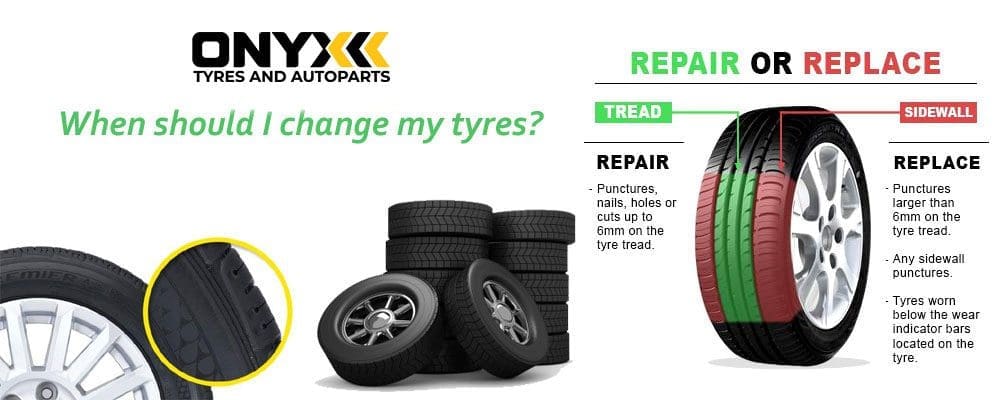
1. Low Tread Depth – The tread is the patterned surface of your tyre that provides grip on the road. As the tread wears down, your vehicle becomes less stable, particularly during wet weather.
In Australia, the legal minimum tread depth is 1.5 mm, but many tyre experts recommend replacing tyres once they reach around 3 mm to maintain better safety and braking performance.
If your tread is close to the wear indicators built into the tyre, it’s time to consider a replacement.
2. Visible Cracks in the Rubber – Exposure to sunlight, heat, and changing weather conditions can cause tyre rubber to crack over time.
Small surface cracks may seem harmless, but deeper cracks can weaken the tyre structure and increase the risk of failure.
If you notice cracking on the sidewalls or tread, have your tyres inspected by a professional.
3. Bulges or Sidewall Damage – A bulge in the sidewall usually indicates internal damage caused by hitting potholes, curbs, or road debris. This type of damage cannot be safely repaired and significantly increases the risk of a tyre blowout. Replace any tyre showing sidewall bulges immediately.
4. Uneven Tyre Wear – Uneven wear often indicates underlying problems such as:
- Incorrect tyre pressure
- Poor wheel alignment
- Suspension issues
- Unbalanced wheels
If one side of the tyre wears faster than the other, replacing the tyre without correcting the underlying issue may result in the new tyre wearing out prematurely.
5. Frequent Loss of Tyre Pressure – If you’re regularly adding air to one or more tyres, there could be a slow puncture, damaged valve, or internal tyre problem.
Persistent air loss should always be investigated to avoid unsafe driving conditions.
6. Increased Road Noise or Vibration – While some tyre noise is normal, excessive vibration or unusual road noise may indicate uneven wear, internal tyre damage, or balancing problems. If vibration continues after wheel balancing, tyre replacement may be necessary.
How to Check Your Tyres at Home
Regular inspections only take a few minutes and can help identify potential problems early.
Check for:
- Tread depth
- Cracks
- Cuts
- Nails or embedded objects
- Bulges
- Uneven wear
- Correct tyre pressure
Inspect your tyres at least once a month and before any long-distance journey.
Factors That Affect Tyre Life
Several factors influence how quickly tyres wear.
- Driving Style – Aggressive acceleration, hard braking, and fast cornering increase tyre wear. Smooth driving helps tyres last longer.
- Tyre Pressure – Driving with underinflated tyres creates excessive heat and causes uneven wear.
- Wheel Alignment – Misaligned wheels cause tyres to scrub against the road, leading to rapid and uneven wear. Regular alignment checks help maximise tyre life.
- Tyre Rotation – Rotating your tyres every 8,000 to 10,000 kilometres promotes even wear and extends their lifespan.
Can Old Tyres Still Be Unsafe?
Yes. Even if the tread appears acceptable, older tyres gradually lose flexibility as the rubber ages. Heat, UV exposure, and environmental conditions contribute to rubber deterioration over time.
If your tyres are more than six years old, it’s wise to have them inspected regularly. If they’re approaching ten years old, replacement is generally recommended regardless of tread depth.
Should You Replace One Tyre or All Four?
The answer depends on the condition of your existing tyres. If one tyre is damaged but the others have plenty of tread remaining, replacing a single tyre may be suitable.
However, if multiple tyres are worn or close to the replacement limit, changing them in pairs—or all four—helps maintain balanced handling, braking performance, and overall safety. A tyre professional can recommend the best option based on your vehicle and the condition of your tyres.
Tips to Make Your Tyres Last Longer
Proper maintenance can significantly extend tyre life.
- Check tyre pressure monthly.
- Rotate tyres regularly.
- Maintain proper wheel alignment.
- Avoid overloading your vehicle.
- Drive smoothly and avoid harsh braking.
- Inspect tyres for damage after long trips.
- Remove stones or debris trapped in the tread.
- Schedule regular tyre inspections.
These simple habits can improve tyre performance and reduce replacement costs over time.
Final Thoughts
Knowing when to change your tyres is essential for safe driving and protecting your investment. Worn, damaged, or ageing tyres can reduce grip, increase braking distances, and compromise your vehicle’s handling, especially during wet weather.
By inspecting your tyres regularly and replacing them before they become unsafe, you’ll enjoy greater confidence behind the wheel and better overall vehicle performance.
If you’re unsure whether your tyres need replacing, the experienced team can inspect your current tyres and help you choose the right replacement for your vehicle. With a wide range of quality tyres and expert advice, we make it easy to stay safe on Australian roads.